Frosted Window Film for Offices and Meeting Rooms
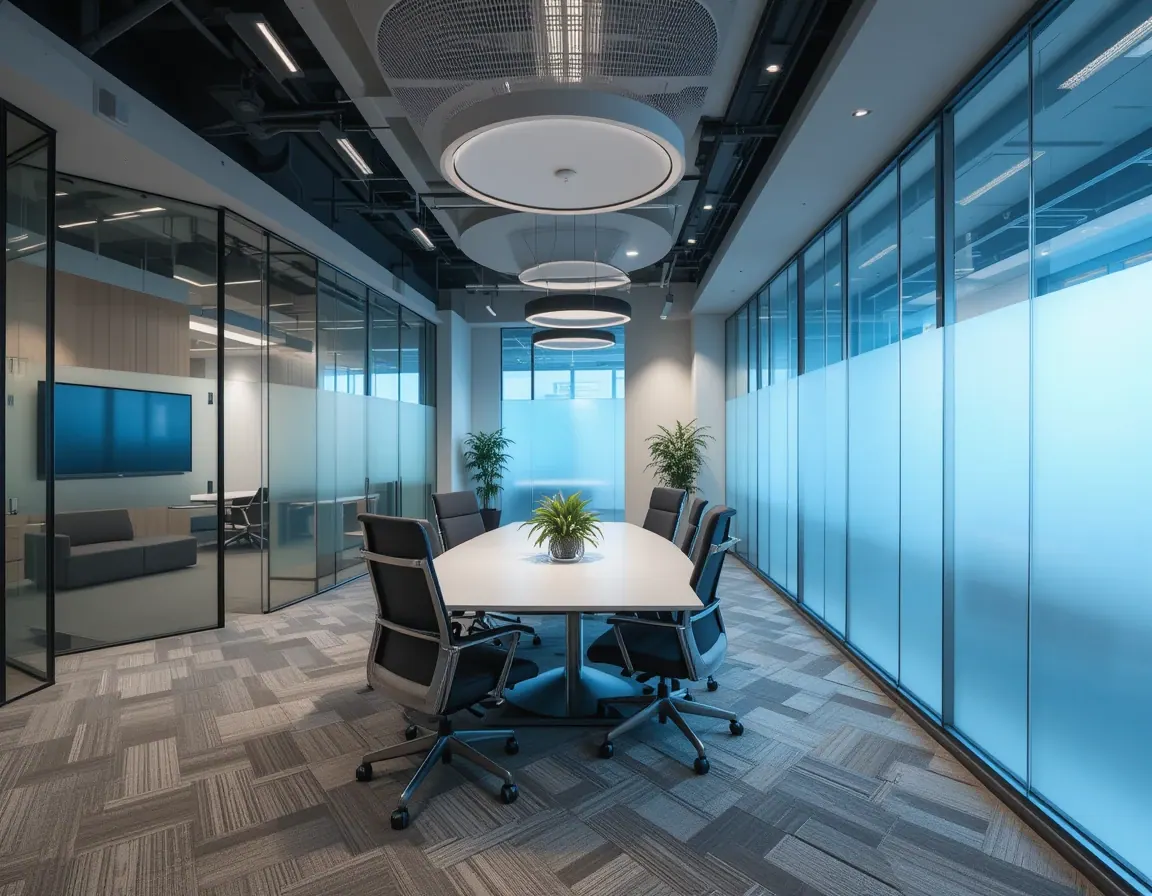
Glass walls make offices feel open and bright, right up until someone needs a private conversation. Meeting rooms, managers’ offices, HR rooms and consulting rooms all need privacy, but blinds look messy and replacing glass is expensive. Frosted window film is the simplest way to add privacy to office glass while keeping the natural light.
This guide explains how frosted film works in offices, the design options available, and how to plan the right amount of frosting for each room.
Why offices use frosted film
Modern office fit-outs use a lot of internal glass: partitions, meeting room walls, glass doors and office fronts. It lets light reach the middle of the floor, but it also means anyone walking past can see who’s in the room and what’s on the screen.
Frosted film fixes this by turning clear glass into translucent glass. Light passes through, but shapes and faces don’t. It’s used for:
- Meeting rooms and boardrooms, so discussions and screens stay private
- Managers’ and HR offices, where conversations are confidential
- Consulting and treatment rooms in clinics and allied health
- Reception and front-of-house glass, often with the company logo
- Toilets, change rooms and staff areas
- Street-level office windows, where privacy is needed day and night
Frosted film vs privacy tint
It’s worth knowing the difference, because they solve different problems:
- Frosted film blocks the view from both sides, day and night. It’s ideal for internal glass where neither side should see through.
- Reflective privacy tint works by brightness. The brighter side becomes a mirror and you can see out from the darker side. It’s great on external windows during the day, but it doesn’t give privacy at night and doesn’t suit internal glass where both sides are lit the same.
For meeting rooms and partitions, frosted film is almost always the right choice. For external glass, see which window films give privacy day and night.
Design options
Frosted film isn’t one look. Common options for offices include:
Full frosting
The whole panel is frosted. Maximum privacy, used for toilets, storerooms, HR offices and anywhere that needs to stay completely private.
Frosted bands
A horizontal band covering seated and standing eye level, usually from around desk height to just above head height. The glass above and below stays clear, so the room still feels open and light flows through. This is the most popular option for meeting rooms.
Gradient films
The frosting fades from solid to clear, giving privacy at the bottom while keeping the top of the glass open. A softer, more architectural look.
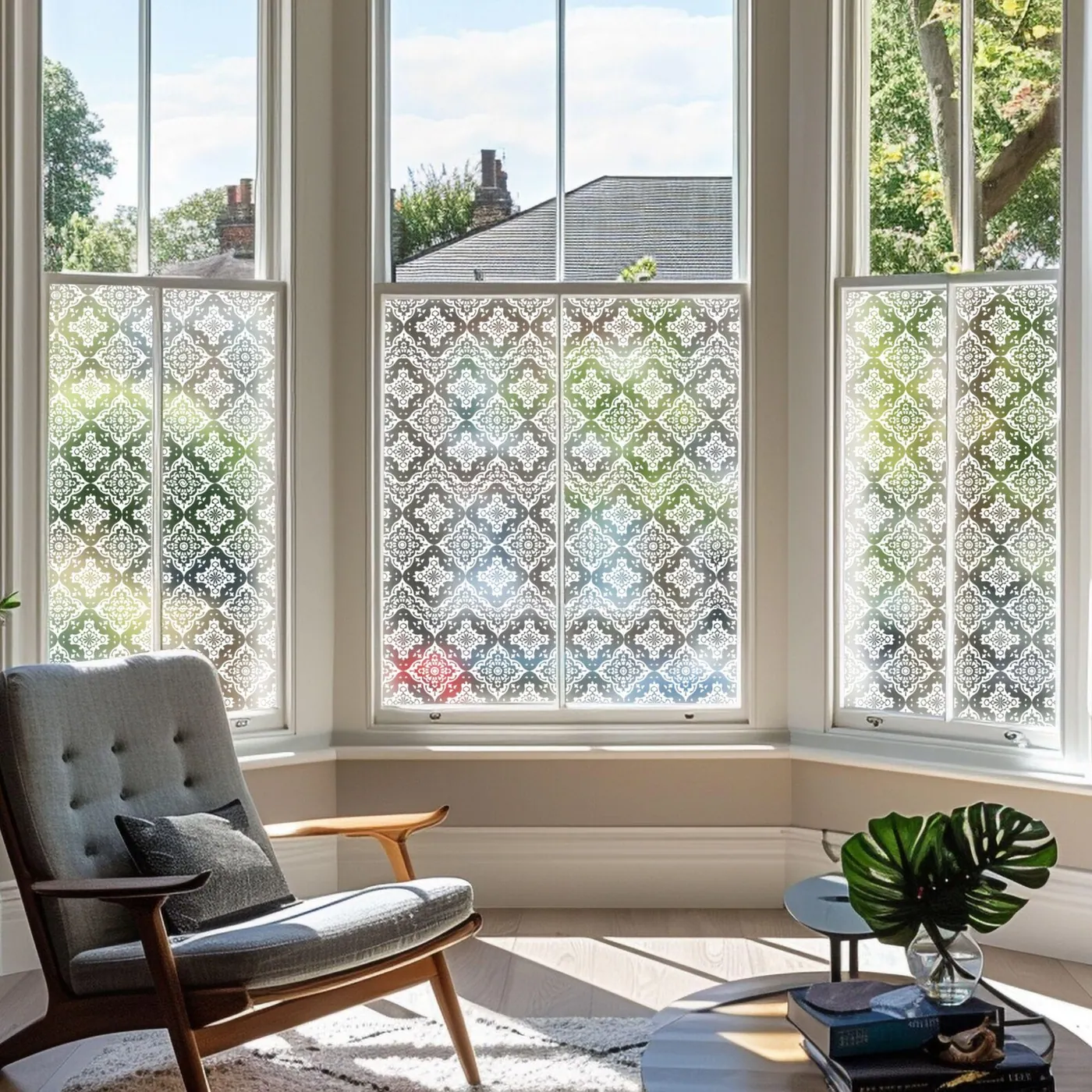
Patterned and decorative films
Lines, dots, fluted or reeded looks and other patterns that give partial privacy and a designed finish. See fluted, reeded and stained glass window film.
Logos and custom designs
Your logo, brand colours or custom graphics can be cut or printed into the frosted film. It’s common on reception glass, entry doors and boardroom walls. Designs need to be arranged before installation so they can be prepared in advance.
Safety: manifestation on glass doors and walls
Large clear glass walls and doors can be hard to see, and people do walk into them. Frosted bands, dots or logos at eye level make the glass visible. If your building manager or fit-out designer has specific requirements for marking glass, we’ll follow their specification.
Planning the right amount of frosting
Before you decide how much to frost, think about:
- Who needs privacy from whom. A meeting room off a busy corridor needs more coverage than one at the end of the floor.
- Seated vs standing eye level. People sitting at a meeting table and people walking past see through different parts of the glass.
- Screens. If presentations or confidential data are shown on a wall screen, frost the glass the screen faces.
- Light. The more glass you leave clear above the band, the more daylight reaches the rest of the floor.
- Branding. Whether the frosting is a chance to show the company name or logo.
We can mark up a sample band on the glass so you can check the height before the job goes ahead.
Cost and speed compared with new glass
Replacing clear glass with etched or obscure glass means a glazier, downtime and a much bigger bill. Frosted film is applied to the existing glass in a fraction of the time and at a fraction of the cost, and it can be removed later if the office layout changes. That’s especially useful for tenants who need to return the glass to its original state at the end of a lease.
Frosting and window tinting together
Many office jobs combine both:
- Solar control film on external windows to cut heat and glare. See office window tinting and glare.
- Frosted film on internal partitions and meeting rooms for privacy.
- Safety film on ground-floor or low-level glass.
Doing it all in one visit keeps the disruption to a minimum, and the work can be scheduled after hours. Read how commercial window tinting works.
Looking after frosted film
Frosted film is easy to care for:
- Wait about 30 days before cleaning, so the film can cure
- Use a soft cloth and a mild, non-abrasive glass cleaner
- Avoid scrapers, abrasive pads and harsh chemicals
- Don’t stick tape or notices directly onto the film
The frosted films we install are covered by a 5-year Solar Gard warranty from the installation date.
The bottom line
Frosted window film gives office glass the privacy it needs without losing the light that makes open-plan offices work. Bands, gradients, patterns and logos let you choose exactly how much privacy each room gets, and the film is faster, cheaper and more flexible than replacing glass.
We install frosted and decorative film in offices, clinics and commercial spaces across Greater Sydney, Wollongong and Wollondilly. See our frosted window film and office window tinting in Sydney pages, or send your glass sizes through the free quote form.